Not only is a solar eclipse a function of the Sun, Moon, and Earth’s size and distances from each other, it also results from their orbital movements. It is these predictable, and observable patterns that creates the opportunity for a solar eclipse to occur and be seen by us on Earth. By creating a live model of a solar eclipse, students can see how the Sun, Moon, and Earth move relative to each other and how their paths need to overlap in a precise manner to create the phenomenon.
Materials:
- Light bulb
- Two spheres (one representing the Earth and one representing the Moon)
- A dark room
- Large, open space for students to view the model
What to Do:
- Have students form a circle around the model. Tell students that the light bulb represents the sun and that the two spheres represent the Earth and Sun. Inform the students that you will be looking at how the Sun, Moon, and Earth move in space relative to each other.
- First start with the Earth. Take one sphere and show how the Earth rotates around Sun, moving it around the light bulb so that all the students can see the movement.
- Then, take the second sphere to show the orbit of the Moon. Isolate the movement by first showing how the Moon orbits the Earth moving the second sphere around the first. Make sure that all students are able to view this moving around the group of students.
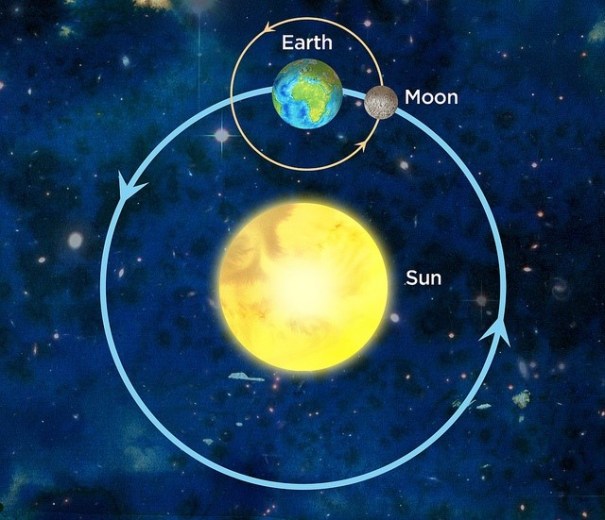
- Combine the two orbits to show how they happen simultaneously. This may be difficult to do by yourself so you may need to recruit a student or a helper so that both the Earth’s and Moon’s orbit are shown at the same time. (Optional) Students can also replicate the orbits themselves in small groups to show that they understand how the Earth, Sun, and Moon move relative to each other.
- Once students have shown an understanding of the Sun, Moon, and Earth’s orbits, bring focus to the effects the orbits have on the Earth throughout the orbital path, specifically the shadow that falls on Earth when the Moon is between the Sun and Earth. Help lead students to see that this shadow is where the solar eclipse occurs and that solar eclipses are a result of the moon blocking the Sun.
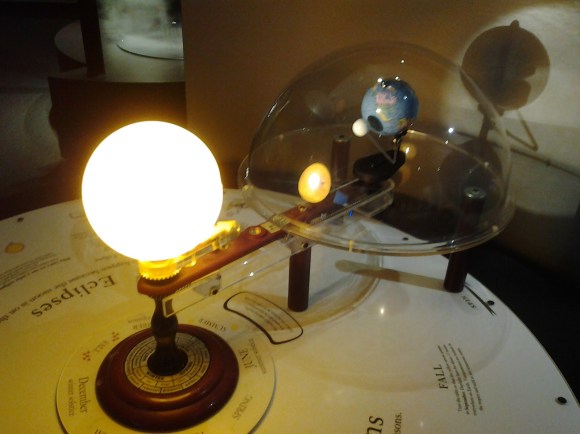
This model will support students by showing that a solar eclipse is when the moon blocks the sun, why only a certain population can see an eclipse (because the shadow is only on a portion of the Earth), and why they only happen sometimes and not all the time. This brings the previous activities together to foster students’ comprehension of how movement affects solar eclipses and also how size and scale combined with movement create the conditions needed for a solar eclipse.
 Solar Eclipses in the Classroom